February 18th, 2026 • 5 mins read
Introduction
Have you ever missed the cut off in an exam? Or missed an assignment deadline that cost you an opportunity? Or maybe failing in one subject despite doing well in others? It makes you replay every choice and wonder what you could have done differently, but it doesn’t have to stop you.
Now you might be wondering how anyone can grow after facing rejection. For teenagers, these moments can feel especially heavy, because grades, exams, and first college admissions often seem like they define your future. When something doesn’t work out, it’s easy to think, “Maybe I’m just not good enough.”
What we believe about our abilities plays a big role in how we react to these setbacks. How we respond to them matters more than the rejection itself.
Research in educational psychology shows that when we see rejection as feedback rather than failure, we become more open to learning, improving, and trying again. Over time, this way of thinking leads to better performance and healthier career outcomes. This way of thinking is called a growth mindset, it unlocks the belief that your abilities aren’t fixed, but can be developed through effort and learning. The powerful concept was developed by Stanford psychologist Carol Dweck, whose research shows that people who see challenges and setbacks as opportunities to grow, are more resilient, motivated in the long run.
Common Types of Career Rejection Teens Face
Indecision-Based Rejections
Sometimes rejection doesn’t happen because you’re not capable, but because you’re not ready yet. Many teens feel confused, unmotivated, or stuck because they don’t know what direction to take. Fixed beliefs like “I’m just bad at this” or a lack of clear information about your own strengths and career options can make it harder to spot the opportunities.
Example: Suppose you saw an opportunity and thought about trying, but could not apply because you were unsure about what you are good at, what your strengths are. So in this case, indecision stopped you from trying.
Research shows that when young people don’t have enough guidance or clarity, making career decisions becomes harder and rejection becomes more likely (Anna Parola, 2024).
So, the good news? Readiness can be built. Taking a career readiness test can help you understand where you stand, and what steps to take next. Through this free assessment on the page, get instant, evidence-based insights to move forward with confidence.
Application Based Rejections
Sometimes, rejection happens not because you lack skill, but because your goals and preparation don’t fully match the opportunity. Not having clear information about what’s needed or what fits you best can cause you to miss important chances. The way forward? You can get that clarity. Check out our blog "How to Choose A Career" for more tips.
Example: Imagine you are applying to a dream college with strong grades and motivation but get rejected. Later, you realize the college prioritizes research experience they were never told was essential. It wasn’t a lack of ability rather your preparation simply didn’t align with the school’s expectations.
Expectations-Based Rejection
Rejection sometimes comes because the qualifications didn’t match with the expectations. So the decision was made based on the eligibility criteria rather than ability.
Example: Suppose you applied for an engineering college which requires minimum 75% marks in maths and physics. You have a strong interest, good extracurriculars but got 60% in physics. So the application was rejected.
Now what’s the next step?
Research shows that rejection can be turned into growth using some strategies.
Strategies To Turn Career Rejection Into Growth
When we look at rejection with a growth mindset, we start to believe more in our own abilities, even after a setback. This confidence pushes us to take on new challenges instead of avoiding them.
Dr. Carol Dweck (2006) stated “Individuals with a growth mindset are more likely to embrace challenges, persist through difficulties, and view failure as an opportunity for growth.” Start by seeing rejection as a chance to learn, ask yourself what you can improve or try differently next time. Set small, achievable goals to keep moving forward and celebrate each success along the way.
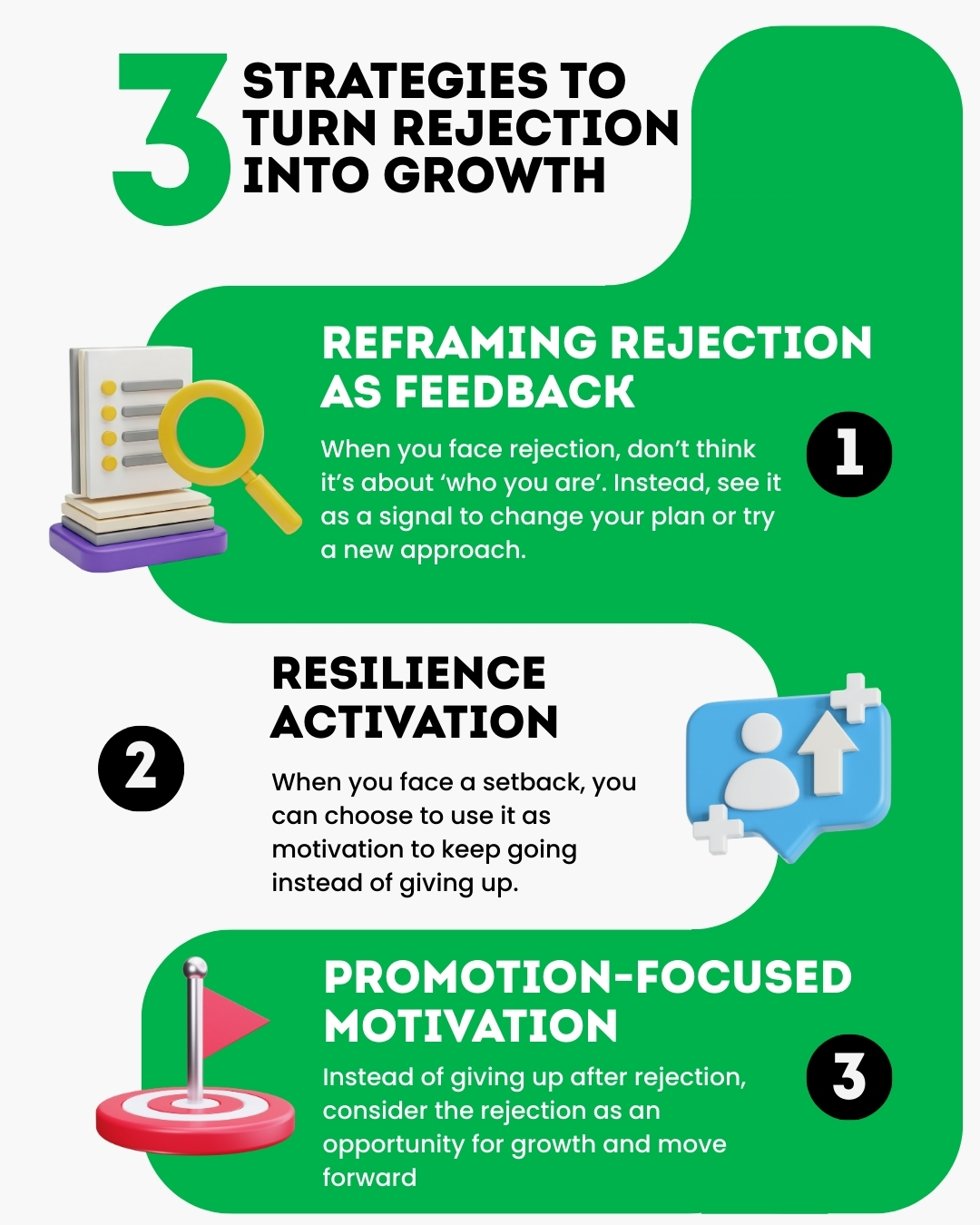
1. Reframing Rejection as Feedback
When you face rejection, don’t think it’s about ‘who you are’. Instead, see it as a signal to change your plan or try a new approach.
- For example, your science project might get rejected at a fair, but improving it could lead to winning next time.
- Your job or internship application might be turned down, but the feedback can help you prepare better for the next one.
- Or even in a group project, if a friend doesn’t like your idea, adjusting it can get the team on board.
Research shows that people who approach rejection this way keep learning and improving. Each “no” can teach you a new skill, and setbacks can become stepping stones for growth.
Did you know? Our clients shared that after completing their self-discovery journey with Inwesol, learning to view rejection as redirection helped them stay motivated and use setbacks as opportunities for growth.
2. Resilience Activation
When you face a setback, you can choose to use it as motivation to keep going instead of giving up. People with a growth mindset believe they can improve by learning from mistakes, practicing, and trying differently again.
Carol Dweck says, ‘In a growth mindset, challenges are exciting rather than threatening. So rather than thinking, oh, I'm going to reveal my weaknesses, you say, wow, here's a chance to grow.’ That means when you fail a test, miss a scholarship, or get rejected, you can see it as a way to get better next time.”(Dweck & Yeager, 2019).
Did you know? In Inwesol’s 1:1 coaching sessions, something really cool takes place. Clients start to get to know themselves better, and understand how to tackle their challenges with their unique strengths.
3. Promotion-Focused Motivation
Our reflection matters more than any rejection. Instead of giving up after rejection, consider the rejection as an opportunity for growth and move forward. When something doesn’t go your way, you tend to feel low and that is okay. After a while, think about how you can do things differently next time.
For example, if you don’t make the basketball team, it is ok to feel upset. Ask yourself why and use that insight to practice better. If you get a low grade, think about how you can study differently next time.
This kind of thinking helps you stay confident and excited to try again. Research shows that believing you can grow your skills through effort, makes it easier to bounce back and keep going toward your goals.
As Carol Dweck says, “In a growth mindset, challenges are exciting rather than threatening. Here’s a chance to grow’.
Conclusion
Career rejection can be tough, but it doesn’t define us. It can affect our motivation and influence the choices you make in the future, but small shifts in how we think and act can make a big difference.
Take the first step today- visit our Future Ready page to explore resources that can help you understand your strengths, understand where you are right now and plan your next moves. Your journey is just getting started, and the better is yet to come!
Want to Read More on Self-Discovery and Career Motivation?
Self-Discovery: The Foundation of a Meaningful Career
How to Choose a Career: 6 Self-Reflective Activities for Intermediate Students
References
Profiles of Career Indecision: A Person-Centered Approach with Italian Late Adolescents - PMC Carol Dweck’s Growth Mindset: "Becoming is better than being" - Psy ABCs Thesis
