June 10th, 2026 • 5 mins read
Beyond Marks: Nurturing Future-Ready Skills in Teenagers
Good marks are important, but they are only one part of a child's growth. Skills like communication, problem-solving, teamwork, and adaptability are becoming equally valuable.
For example, two teens may have similar grades, but the one who can work well with others and learn new skills quickly may be better prepared for future opportunities. That's why parents should encourage both academic learning and skill development.
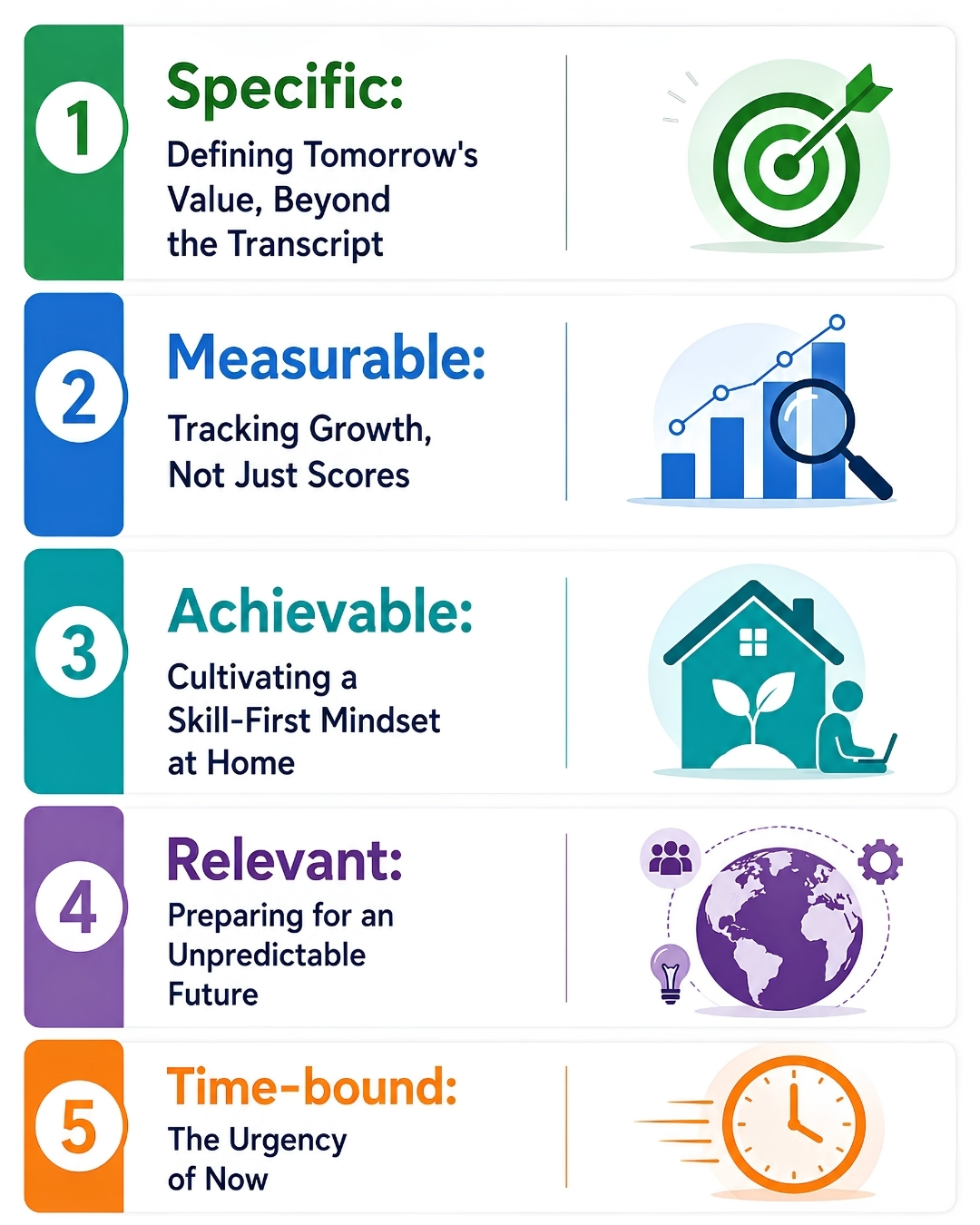
A. Specific: Defining Tomorrow's Value, Beyond the Transcript
In today's world, marks are important, but skills matter too. Communication, problem-solving, teamwork, and adaptability help teenagers prepare for future opportunities. A growth mindset encourages them to learn from mistakes, take on challenges, and keep improving through effort and practice.
B. Measurable: Tracking Growth, Not Just Scores
Measuring genuine skill development requires moving beyond static percentages to dynamic demonstrations of capability. Parents can track progress by observing how their teen applies knowledge in novel situations, effectively collaborates on projects, or innovates solutions to real-world problems. This aligns with formative assessment, an educational approach focused on continuous feedback and improvement rather than just a final grade, allowing for ongoing adjustments and deeper learning.
Project Portfolios: Encourage your child to build a digital or physical collection showcasing their work, from coding projects to creative writing, reflecting actual capabilities.
Problem-Solving Scenarios: Engage them in open-ended challenges, like designing a sustainable garden or planning a family trip, to observe their planning, research, and execution skills.
Peer & Self-Assessment: Foster a culture where children reflect on their own performance and provide constructive feedback to others, enhancing meta-cognitive awareness and collaboration.
C. Achievable: Cultivating a Skill-First Mindset at Home
Parents can empower children to prioritize skill acquisition through intentional, daily interactions and by reframing the very purpose of learning. This isn't about discarding marks entirely but about integrating them into a broader, more impactful developmental strategy. Shifting focus from "what did you get?" to "what did you learn, and how can you use it?" profoundly impacts a child's internal motivation and future readiness.
Empower Exploration: Provide resources and opportunities for children to dive deep into subjects that genuinely interest them, fostering intrinsic motivation and self-directed learning.
Embrace Productive Failure: Create a safe space where mistakes are viewed as learning opportunities, encouraging resilience and experimentation over the fear of imperfection.
Connect Learning to Life: Regularly discuss how school subjects relate to real-world careers, current events, or personal hobbies, making learning relevant and actionable.
D. Relevant: Preparing for an Unpredictable Future
Focusing on skills helps teenagers adapt to a changing world. Skills like problem-solving, communication, and teamwork prepare them to face new challenges and learn new things with confidence. This is supported by neural plasticity, the brain's ability to grow and form new connections through learning and practice. These abilities help build resilience and prepare teenagers for future opportunities.
E. Time-bound: The Urgency of Now
The future is changing quickly. As technology and workplaces continue to evolve, children need more than good marks to thrive. Developing practical skills now will help them adapt to change, seize new opportunities, and feel more confident about their future.
Conclusion
- High marks on a test will increasingly represent only a fraction of a child's true capability.
- Demonstrable skills, critical thinking, creative problem-solving, digital fluency, and collaboration are the new foundational currencies.
- Parents must shift focus from GPA obsession to fostering tangible capabilities that unlock real-world value.
The Micro-Step for Tonight
Tonight, initiate a five-minute conversation with your child (aged 10-17) using this prompt: "Tell me about one thing you learned today that excited you, and how you could use that knowledge to create or solve something this week?" Listen without judgment, fostering their intrinsic curiosity and connecting learning to real-world application.
